Logged Off and Wrenching: The Young Gearheads Ditching the Algorithm for the Real Thing

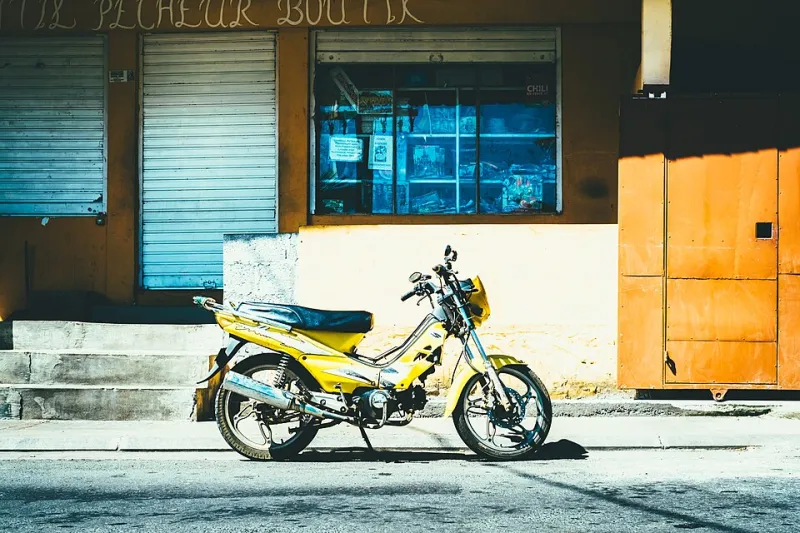
Photo: Unknown authorUnknown author, Public domain, via Wikimedia Commons
The meet starts at 6 a.m. on a Saturday, at a spot that isn't posted anywhere online. You find out about it through a text chain, or because someone at the last one handed you a card with a date and a vague cross-street reference. There's no hashtag. There's no livestream. Phones stay in pockets, mostly by choice.
By 7 a.m., there are forty cars in a gravel lot outside Fresno, California, and half the people there are under thirty.
This isn't a scene that's supposed to exist, if you believe what the automotive internet tells you. Gen Z, the story goes, only cares about content. They want the cinematic reel, the algorithm bump, the fifteen seconds of a revving engine set to whatever sound is trending. They're the generation that grew up on screens and lives for the feed.
Except a lot of them don't. And they're building something in the spaces the algorithm can't reach.
The Backlash Nobody Saw Coming
It's worth understanding what they're reacting against. The online car scene — and this is not a criticism, just an observation — has increasingly optimized itself for performance. Not performance in the mechanical sense, but performance in the theatrical one. The build reveal. The dyno pull. The meet walkthrough shot in golden hour with a playlist that slaps. Everything is produced. Everything is a moment designed to be captured.
For a lot of young enthusiasts, that started to feel hollow.
"I got really into cars watching YouTube and TikTok," says Jordan Kwon, 23, who builds and tracks a modified Honda S2000 out of his parents' garage in suburban Atlanta. "But after a while I realized I wasn't learning anything. I was just consuming. I'd watch a build series and feel pumped, and then close the app and go to sleep. Nothing was actually happening for me."
So he started actually doing things. He found a local autocross club through a forum — an old-school, text-heavy forum, the kind that doesn't have a social media presence — and showed up with his car and zero experience. Two years later, he's one of the more competitive drivers in his class, and he's helped three other young guys get their first track days organized.
"The online car community makes it feel like you need a $80,000 build to be legitimate," he says. "The actual community I'm in now, the dude who shows up with a stock Miata and a helmet is just as welcome as the guy with the full cage and the Haltech tune. That's real."
Analog First, Always
What's emerging isn't a rejection of enthusiasm — it's a rejection of performance for its own sake. The young enthusiasts driving this shift aren't anti-technology. They're not nostalgic for some era they never lived through. They're just making a deliberate choice about where they put their energy.
In Portland, a group of riders in their early-to-mid twenties runs what they call a "no-post ride." Every participant agrees before the ride that nothing from the day goes on social media. No stories, no reels, no location tags. The ride exists only for the people who were there.
"It changes how you experience it," says Maya Delacroix, 26, one of the organizers. "When you're not thinking about getting the shot, you're just riding. You're actually in it. I did a solo trip through the coast range last fall and I left my phone in the tank bag the whole time. It was the best ride I've had in years. Nobody saw it. That's kind of the point."
She pauses. "I know that sounds weird coming from someone my age. But I think a lot of us are realizing that some things get ruined when you share them."
The Rise of the Private Build
Another front in this quiet counter-movement is the build itself. For years, the online culture incentivized public builds — document everything, post every stage, build an audience as you build the car. Sponsors pay for reach, and reach requires content, and content requires turning your personal project into a production.
A growing number of younger builders are deliberately keeping their projects private. Not secret, exactly — they'll talk about what they're working on with people they trust — but off the internet entirely. No build thread, no Instagram, no progress updates for strangers.
Tyler Manzano, 21, is rebuilding a 1987 Kawasaki Ninja 600 in his apartment complex's parking lot in Phoenix. He's been at it for eight months. Nobody online knows it exists.
"My friends who do the social media thing spend half their time managing the comments and the DMs and the people saying they're doing it wrong," he says. "I don't have any of that. It's just me and the bike. When it's done, maybe I'll take some pictures. Maybe I won't. I don't really care. I just want to ride it."
The contrast with the polished, follower-chasing side of the scene is stark. No sponsorships. No affiliate links. No pressure to finish on a timeline that works for the algorithm. Just a kid and a bike and the long, slow satisfaction of figuring it out.
Track Days Over Trending
If there's one place this generational shift is most visible, it's at local track days. Across the country, HPDE events and autocross series are reporting upticks in younger participants — not social media influencers bringing cameras to content, but actual drivers showing up to learn and go fast.
The appeal is obvious once you think about it. The track doesn't care about your follower count. You can't fake a lap time. There's a purity to it that's almost radical in the current climate: your performance is the only thing that matters, and it's immediately, undeniably real.
"I think a lot of us are tired of things that aren't real," says Jordan Kwon. "Like, I can watch a thousand videos of guys doing clutch kicks in a parking lot, and none of it means anything. But the first time I put down a clean run and shaved two seconds off my time, that was mine. Nobody can take that."
What This Means for Car Culture
The easy read on this is generational rebellion — kids pushing back against the thing their slightly older peers built. And there's some of that. But it's also something more durable. It's a recognition that car culture, at its core, has always been about the thing itself: the machine, the road, the skill, the community of people who get it.
The algorithm didn't invent any of that. It just found a way to monetize the surface of it. And now some of the youngest people in the scene are finding their way back under the surface, to where the real stuff lives.
No cameras. No captions. No follower counts.
Just the ride.