When the Build Breaks the Bond: Real Stories From the Other Side of Car Obsession

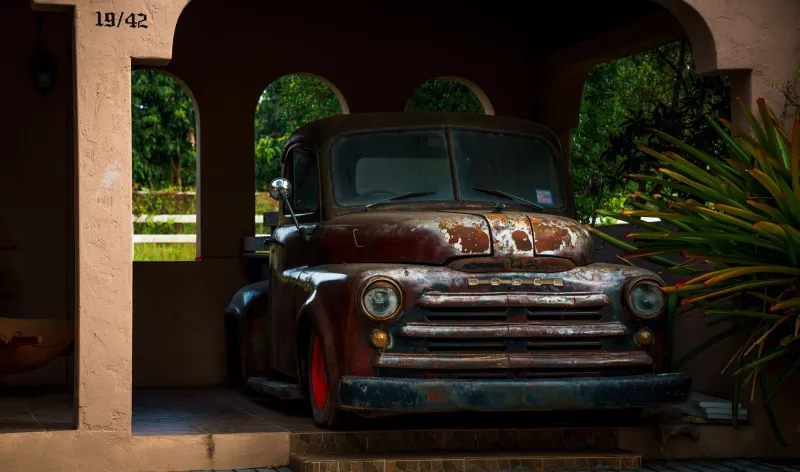
Photo by Photo by Ralph Darabos on Unsplash on Unsplash
There's a version of this story that ends with a gleaming engine bay, a trophy on the shelf, and a cold beer in hand. That's the one we usually tell. But there's another version — quieter, messier, harder to post on Instagram — where the garage lights are still on at 2 a.m. and the house behind it is empty.
We're not here to preach. Nobody at Ride2Die is going to tell you to sell your project car and take up gardening. But we'd be doing you dirty if we didn't talk about what happens when passion crosses a line — and how some of the most dedicated people in this community have had to learn the hard way where that line actually sits.
The First Sign Nobody Talks About
Ask Marcus T., a 41-year-old from Columbus, Ohio, when things started going sideways, and he doesn't point to the moment his wife left. He points to the weekend he missed his daughter's birthday party because he was three hours deep into chasing a vacuum leak on a '69 Chevelle he'd been building for six years.
"I told myself I'd be done by noon," he says. "It was 7 p.m. when I looked up. I'd completely lost track. That was the moment — I just didn't know it yet."
The Chevelle was supposed to be a two-year project. It turned into a decade-long financial and emotional sinkhole. Marcus estimates he spent upward of $60,000 on the car over the years — money that was supposed to go toward a house addition, a vacation, a college fund. "Every time I thought I was close to done, something else needed fixing or upgrading. That's the trap. You're never actually done."
His wife, Sarah, held on longer than most would have. "She loved that I had a passion," Marcus admits. "But there's a difference between passion and disappearing. I disappeared."
The Economics of Obsession
It's not just relationships that take the hit. The financial reality of an unchecked build habit can be genuinely devastating, and it tends to happen gradually enough that enthusiasts don't see it coming.
Jennifer K., a 38-year-old from Detroit, got deep into the custom motorcycle scene in her early thirties. What started as a $4,500 Sportster turned into a rolling collection of parts, upgrades, and half-finished ideas. She refinanced her car twice to fund components. She ran up credit cards. She sold furniture.
"I justified every single purchase individually," she says. "Each part made sense on its own. It was only when I actually sat down and added it all up — like, really forced myself to look at the number — that I nearly threw up. It was almost $30,000 over four years. And the bike still wasn't where I wanted it."
Jennifer didn't lose a partner — she'd been single through most of it — but she lost something else: her financial foundation. At 38, she was starting over with savings that should have been growing for a decade. "I had to get really honest with myself about what I was actually buying. And a lot of it wasn't the bike. It was the feeling of working on it. The escape. The bike was just the vehicle — no pun intended."
Where Devotion Ends and Avoidance Begins
That word — escape — comes up a lot in these conversations. And that's where things get complicated, because for a lot of people, that's exactly what the garage is supposed to be. A place to decompress. A space that's yours. There's nothing wrong with that. The question is what you're escaping from, and whether the garage is helping you deal with it or just helping you avoid it.
Dr. Linda Cho, a therapist based in Chicago who works with clients dealing with compulsive hobby behaviors, sees this pattern regularly. "The garage or the workshop can become a really effective avoidance mechanism," she explains. "And because it's socially acceptable — even celebrated in certain communities — it's very easy to rationalize. Nobody's going to stage an intervention because you're 'working on your car.'"
She notes that the enthusiast community's own culture can reinforce the problem. The more hours you put in, the more credibility you earn. Sacrifice is worn as a badge of honor. "When your peer group celebrates the obsession, it becomes very hard to hear the people in your personal life who are telling you something's wrong."
Finding the Recalibration
Here's the part that surprised us when we started making calls for this story: almost everyone we talked to still loves cars and bikes. The passion didn't go away. What changed was the relationship with it.
Marcus sold the Chevelle. He bought a clean, already-finished '72 Nova from a guy in Indiana — paid a fair price for something he could just drive and enjoy. "It was the best decision I ever made. I didn't need to build it. I needed to drive it. I'd been confusing the two things for years."
Jennifer set a hard monthly budget for her motorcycle — parts, maintenance, registration, all of it — and treats it like a utility bill. Non-negotiable cap. "I still ride every chance I get. I still wrench on it. I just don't let it be unlimited anymore. Turns out having a limit actually made it more fun, not less."
Nobody we spoke to said they wished they'd never gotten into cars or bikes. What they wished was that they'd been a little more honest with themselves earlier — about money, about time, about what they were really chasing.
The Ride Is Still Worth It
This community is built on passion. That's not the problem — it's the whole point. Ride2Die exists because there are people out there who feel something real when a cold engine turns over, when a lean corner opens up, when a project finally comes together after months of grinding. That feeling is legitimate. It matters.
But the ride doesn't have to cost you everything to mean something. The most dialed-in people in this scene — the ones who've been at it for decades without losing the plot — tend to be the ones who figured out early that the car or the bike is part of the life, not a replacement for it.
The garage will always be there. Make sure the people you love can say the same.