Dead Metal Rising: The Obsession Fueling America's Classic Car Rescue Movement
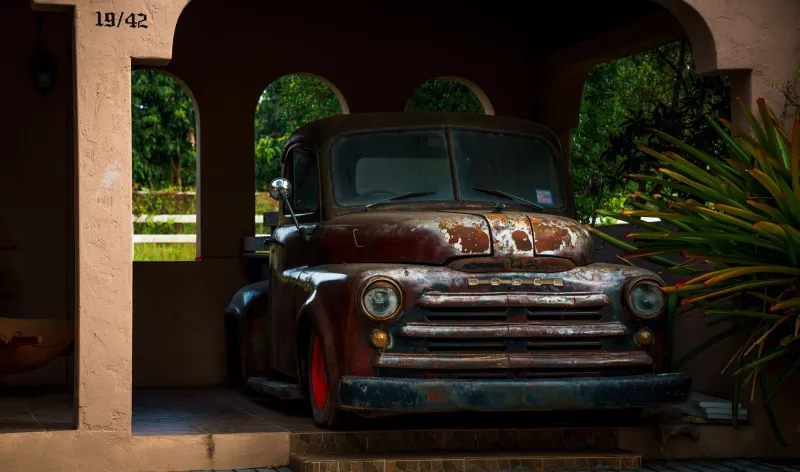
There's a particular kind of silence that settles over a barn when you swing open those old wooden doors for the first time. Dust floats in the slanted light. Pigeons scatter. And then you see it — a chrome bumper catching a sliver of sun, a roofline you recognize from old car magazines, a fender that still holds its curve beneath thirty years of grime. Your heart does something stupid. You already know you're going to buy it.
This is the moment that defines an entire subculture. Call them barn hunters, rust rescuers, or just flat-out obsessives — there's a growing army of American car guys (and women) who've made it their mission to drag forgotten machines back from oblivion. And the movement is bigger, louder, and more connected than ever before.
Why Forgotten Cars Pull People In
It's tempting to chalk this up to nostalgia, and sure, that's part of it. But talk to anyone who's deep in a restoration project and they'll tell you it goes way beyond missing the past. There's something almost spiritual about a car that's been sitting untouched for decades. It's a time capsule. It's a puzzle. It's a machine that once mattered to someone, and now it matters to you.
Mike Castillo, a machinist out of Albuquerque, spent four years tracking down a 1969 Dodge Charger that had been sitting in a New Mexico ranch outbuilding since the Carter administration. The owner's son didn't even know the title was still valid. "I drove out there three times before the guy would even talk to me," Mike says. "When he finally let me in and I saw that car, I cried. I'm not ashamed of it. That thing deserved to live."
Mike's not alone in that emotional response. For a lot of restorers, these cars carry weight that goes beyond sheet metal and horsepower. They represent eras, relationships, and in some cases, family history. Rescuing one feels less like a hobby and more like an act of preservation.
The Hunt Is Half the Religion
Ask anyone in the restoration community what their favorite part of the process is, and a surprising number won't say "the finished product." They'll say the hunt.
Scouring estate sales, cold-calling farmers, driving back roads looking for a roofline poking out of tall grass — the search itself has become a culture within the culture. Online platforms have transformed the game, too. Facebook Marketplace, Craigslist, and dedicated forums like Barn Finds have become digital treasure maps. Tips get shared, leads get followed, and occasionally, someone strikes gold.
Jenna Okafor, who runs a popular YouTube channel out of rural Tennessee, built her entire audience around the search. Her videos — often shot on a phone, unscripted, raw — follow her as she chases leads on forgotten muscle cars and vintage pickups. She's pulled a '67 Mustang fastback out of a collapsed carport and found a numbers-matching Chevelle under a tarp in someone's backyard. "People think I'm lucky," she says. "I'm not lucky. I've knocked on a thousand doors that went nowhere. You just don't see that part."
Social Media Changed Everything
A decade ago, the restoration community was fragmented — local car clubs, regional swap meets, word of mouth. Now, Instagram and YouTube have turned individual projects into shared journeys. A guy in Ohio stripping a '72 Camaro in his driveway can have fifty thousand people following along, offering advice, sourcing parts, and cheering at every milestone.
This visibility has done something interesting to the culture. On one hand, it's created a massive support network. Obscure parts that would've taken years to find through classified ads can now be sourced in hours through community posts. Techniques get shared freely. Mistakes get documented so others don't repeat them.
On the other hand, it's introduced a competitive edge that didn't used to exist. Build quality gets scrutinized publicly. Debates over "correct" restoration versus custom builds play out in comment sections. Some purists bristle at the influencer layer that's grown around what they consider a deeply personal craft. "I don't care about likes," one longtime restorer told us bluntly. "I care about whether the door gaps are even."
Both attitudes exist in the same space, and honestly, that tension keeps things interesting.
The Real Cost Nobody Talks About Enough
Let's not romanticize this into something it isn't. Rescuing a dead classic is brutally expensive, physically demanding, and emotionally exhausting. Parts for obscure vehicles can cost more than the car itself. Machine shops have long wait times. Rust is almost always worse than it looks. And life has a way of interrupting long-term projects — jobs change, families grow, garages flood.
The so-called "project car" that sits half-finished in a garage for years is a running joke in the community for a reason. The joke lands because it's true more often than anyone wants to admit.
But here's what keeps people going: the community around them. Whether it's a buddy who shows up on Saturdays to help, an online forum that talks someone through a wiring nightmare, or a spouse who tolerates the grease stains and the credit card bills — restoration is rarely a solo endeavor, even when it feels like one.
What It Means to Ride2Die for a Car
At its core, the resurrection movement is about commitment to something bigger than convenience. Nobody rescues a rusted hulk because it makes financial sense. Nobody spends a thousand hours on a car they could replace with something newer and faster and cheaper. They do it because the machine means something. Because the act of saving it means something.
There's a version of car culture that's about speed, status, and show floors. And then there's this version — muddy boots, busted knuckles, and a car that runs again because someone refused to let it die.
That's the version that lives in the bones of this hobby. And if you've ever swung open a barn door and felt your pulse jump at what's inside, you already know exactly what we're talking about.