Forty and Throttling: The Real Reason Americans Are Swapping Four Wheels for Two in Midlife
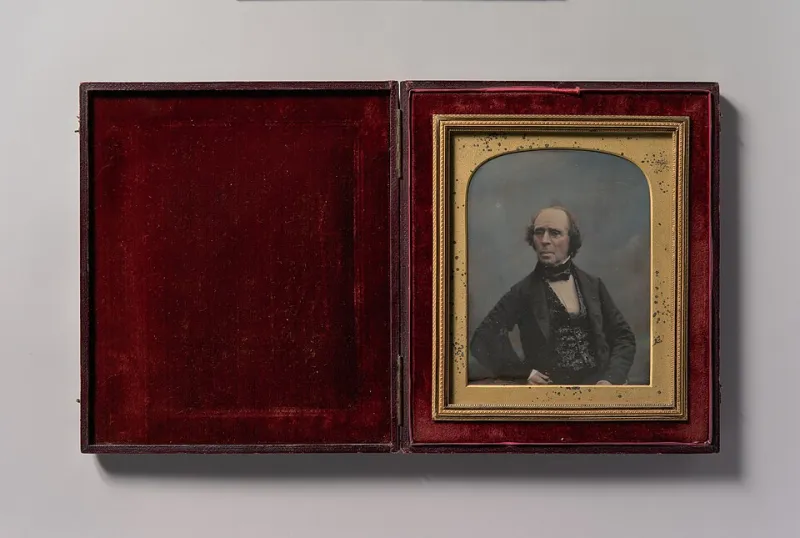
Photo: Antoine Claudet, CC0, via Wikimedia Commons
Something unexpected is happening in driveways across America. Sedans are getting pushed aside to make room for motorcycles. SUVs are sitting idle while their owners spend weekends in riding gear, logging miles on roads they've driven a hundred times but never really felt before. For a growing number of Americans hitting their forties and fifties, two wheels aren't a midlife cliché. They're a genuine reckoning with who you are and what you actually want from the road.
The numbers back it up. The Motorcycle Industry Council has consistently reported that the median age of motorcycle owners in the US has climbed well into the mid-forties. New rider courses through the Motorcycle Safety Foundation are seeing record enrollment from adults who haven't touched a bike since their twenties — or who never rode at all. This isn't the classic leather-and-Harley fantasy of a previous generation. It's something messier, more personal, and honestly a lot more interesting.
When the Car Stops Being Enough
Ask anyone who made the switch and the conversation rarely starts with horsepower specs. It usually starts with a feeling — or more accurately, the absence of one.
Denver-based project manager Rick Holloway bought his first motorcycle at 47 after twenty years of commuting in a succession of practical family vehicles. "I wasn't unhappy," he says. "That's the thing nobody tells you. It wasn't some dramatic breaking point. I just realized I'd stopped looking forward to driving. The car had become a box I sat in between places."
That sense of disconnection is something riding instructors and motorcycle culture observers hear constantly from older new riders. The modern automobile has become extraordinarily good at insulating you from the road — climate control, noise cancellation, driver assistance systems that nudge and correct without you asking. All of it designed to reduce friction. The problem is, for a certain kind of person at a certain point in life, that friction was the whole point.
Motorcycling forces presence in a way almost nothing else does. You're reading the road surface, monitoring traffic on all sides, managing throttle and lean angle simultaneously. There's no autopilot. There's no podcast loud enough to fully pull your attention away. You ride, or you don't.
The Psychology of the Calculated Risk
Psychologists who study adult development have a name for what a lot of these riders are chasing — though it sounds far less romantic in clinical language. The midlife period, roughly 40 to 60, often triggers what researchers call a "mortality salience" shift: a heightened awareness that time is finite, which pushes people toward experiences that feel vivid and immediate rather than comfortable and predictable.
Motorcycling sits in an interesting psychological sweet spot. It's genuinely risky — there's no honest way around that — but it's also a managed risk. You're not being reckless. You're choosing to engage with the world on terms that feel alive. For people who've spent two decades being responsible, that distinction matters enormously.
"It's not about being young again," says Karen Deluca, a 52-year-old ER nurse from Nashville who earned her license three years ago and now rides a Triumph Bonneville. "I don't want to be young again. I want to feel like me again. There's a difference."
Deluca's point cuts to something important. The narrative around midlife motorcycle riding too often gets framed as escapism or regression — the guy who can't accept he's getting older, buying a bike to pretend otherwise. The reality, at least among the riders who seem most at peace with the decision, is nearly the opposite. They're not running from middle age. They're running into it, on their own terms.
Learning to Ride When You Actually Know Better
There's a practical dimension to this demographic shift that doesn't get talked about enough: older new riders are, in a lot of ways, better students than their younger counterparts.
MSF instructors frequently note that adults in their forties and fifties tend to be more coachable, more patient with the learning curve, and more honest about their own limitations. They've lived long enough to know that overconfidence gets people hurt. They're also, typically, in a better financial position to invest in proper gear, quality machines, and ongoing training.
If you're somewhere in this demographic and the itch is getting serious, a few things are worth knowing. Start with an MSF Basic RiderCourse — it's a weekend commitment that will genuinely change how you approach the machine and the road. Don't let anyone talk you into starting on something too powerful; a 400-650cc middleweight is plenty of motorcycle while you're building muscle memory. And budget for real gear. Helmet, jacket, gloves, boots — the kind of gear that actually protects you, not the kind that looks good in photos.
The bike itself matters less than the culture suggests. Harley loyalists will tell you one thing, the adventure bike crowd will tell you another. Ride what fits your body, your budget, and the roads you actually plan to be on.
The Community You Didn't Know You Needed
Here's the part nobody warns you about: the people.
Motorcycle culture, for all its tribal divisions and gear-snob tendencies, has a genuine warmth to it that's hard to find in most other corners of the automotive world. The two-finger wave between riders passing in opposite directions sounds like a small thing until you've experienced it a few hundred times and realized it never stops meaning something. The conversations that happen in gas station parking lots, at overlooks, at the end of a long day's ride — they're different from the ones you have at car shows or track days. More direct. Less performative.
Rick Holloway, two years into his riding life, says the community piece surprised him most. "I expected to like the riding. I didn't expect to find my people."
That might be the truest thing about this whole phenomenon. The motorcycle isn't really the point. The road isn't really the point. The point is finding your way back to something that feels genuinely, unmistakably yours — and discovering, somewhere along the way, that you're not the only one looking.
Throttle up. The road's been waiting.