Grease, Grudges, and Growing Apart: What Happens When the Project Car Becomes the Third Partner
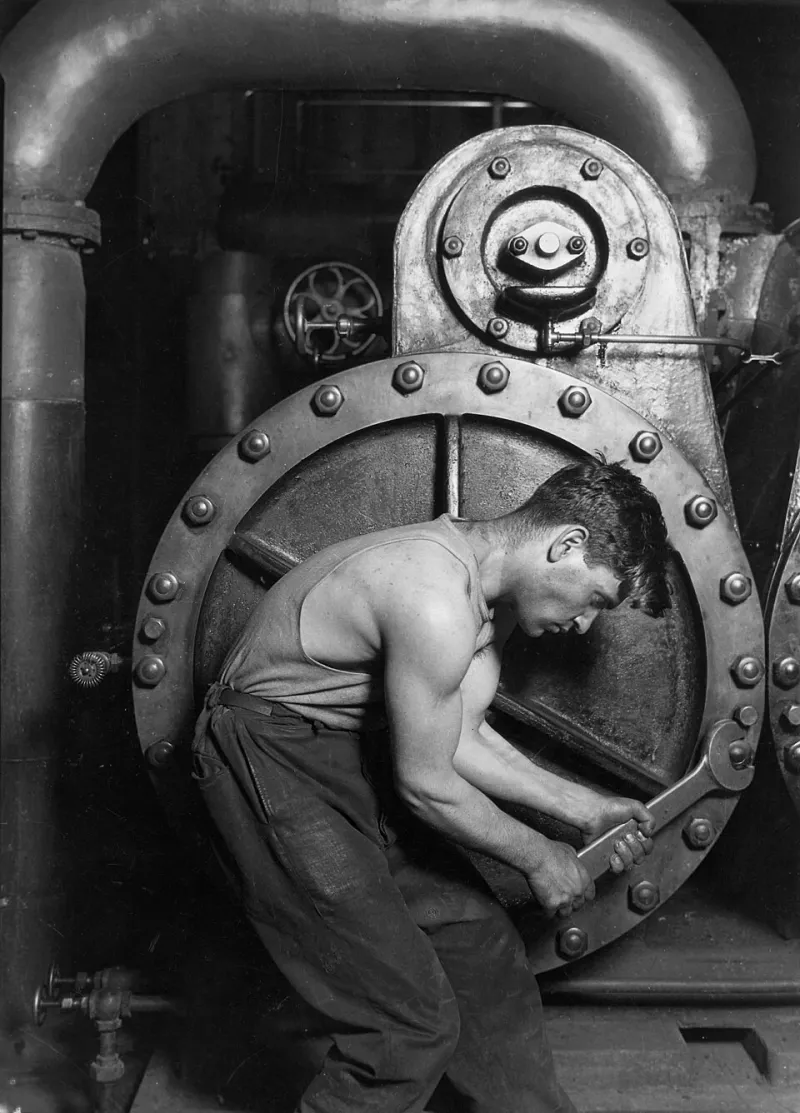
Photo: Lewis Hine, Public domain, via Wikimedia Commons
There's a '72 Chevelle sitting in a garage in Tulsa, Oklahoma, that hasn't moved under its own power in six years. The engine is rebuilt. The body panels are straight. The interior is gutted down to bare metal. And the man who started the project is now living in an apartment twenty minutes away, paying rent instead of a mortgage, with a custody schedule for his kids printed on the refrigerator door.
His name is Derek. He's 44. And he'll tell you straight up: the car didn't end his marriage. But it handed his wife every piece of evidence she needed to make her case.
"She wasn't wrong," he says. "I just couldn't see it at the time."
This is a story that plays out in garages across the country every single week — quietly, painfully, and usually without anyone outside the household knowing how bad it got until the moving truck shows up.
More Than a Hobby, Less Than a Partner — Or Is It?
The relationship between a gearhead and their project car is genuinely hard to explain to someone who doesn't feel it. It's not just a thing you're fixing. It's a goal, an identity, a stress valve, a time machine back to whoever you were before life got complicated. Ask any serious builder and they'll struggle to articulate why a half-disassembled shell in the driveway gives them more peace than a week at the beach.
But that same intensity that makes the obsession beautiful is exactly what makes it corrosive to a relationship when it goes unchecked.
Amy, a teacher from outside Nashville, spent four years watching her husband pour weekends, tax returns, and what she describes as "every good hour he had" into a first-gen Ford Bronco restoration. She wasn't anti-car. She actually liked trucks. What she couldn't stomach was the math.
"It wasn't about the Bronco," she says. "It was about the fact that on a Saturday when I needed help with the kids, or when we had something planned, the answer was always the same. The truck came first. I started to feel like I was the project he kept putting off."
That phrase — the project he kept putting off — is one that relationship counselors who work with couples in this kind of conflict hear with surprising regularity.
The Money Problem Nobody Wants to Talk About
Time is one battlefield. Money is the other, and in a lot of cases it's the one that finally draws blood.
Project cars don't respect budgets. A guy who swears a build will cost him five grand is usually looking at fifteen by the time he's sourced the right parts, paid a machine shop, fixed what he broke trying to fix something else, and bought tools he didn't know he needed. For a dual-income household with a mortgage and kids in activities, that financial drift can feel like a betrayal — even if every purchase was technically affordable on its own.
Marcus and Leila, married nine years and living in suburban Phoenix, nearly split over a '69 Camaro that Marcus had owned since before they met. Leila wasn't asking him to sell it. She was asking him to stop financing it.
"We had a home equity line," she explains. "He used it for the car without telling me. Not a huge amount, but it wasn't his call alone to make. That was the moment I realized we weren't actually partners. I was just the person he lived with."
Marcus says he genuinely didn't think she'd care that much. Which, he now admits, was the real problem.
"I treated her like a roommate who'd been consulted, not a wife who had a real stake in what we were building together. The Camaro was more real to me than our financial future. That's a hard thing to say, but it's true."
They're still married. Barely, and not without a lot of work. The Camaro is still in the garage, but it runs now — and there's a joint account that Marcus doesn't touch without a conversation first.
What the Couples Who Make It Do Differently
Not every story ends in a split. Plenty of gearheads and their partners have found ways to keep the build alive without letting it eat the relationship. What separates them isn't luck. It's a set of habits that look a lot like basic respect dressed up in shop talk.
They put a number on it. Successful couples treat the project like a line item, not a blank check. A monthly budget for parts and supplies, agreed on together, takes the financial ambiguity out of the equation. When the money's gone, the wrenching stops until next month.
They protect the calendar. Dedicating specific days or half-days to garage time — and actually holding to it — means a partner can plan around it. The resentment usually isn't about the hours spent on the car. It's about the unpredictability. Nobody wants to feel like they're always the backup plan.
They bring the partner in. Not every significant other wants to learn to gap spark plugs, and that's fine. But plenty of non-gearhead partners have said that being invited into the process — even just to hold a flashlight, or hear the story of why this particular car matters — made them feel included rather than excluded. The car stops being a rival and starts being a shared thing.
They set a finish line. Open-ended projects breed open-ended resentment. Couples who make it through tend to have some version of a goal: a show date, a first drive, a milestone. It gives both partners something to work toward instead of just endure.
The Ones Who Didn't Make It
Derek, back in Tulsa, says he wishes someone had told him any of this earlier. He had the Chevelle before he had his wife, and somewhere in his head that meant the car had seniority. It didn't work that way.
"She used to say she felt invisible," he says. "I thought she was being dramatic. Now I get it. When you're that deep in something, everything else just becomes noise. Your family becomes noise. That's not okay."
He still goes to the garage on weekends. The Chevelle is getting closer. But the finish line means something different now — a little less triumphant, a little more complicated.
The ride was supposed to be everything. Turns out, it matters a lot who's in the car with you.