Patches Don't Lie: The Brotherhood Codes Keeping Motorcycle Club Culture Alive When Everything Else Is Disposable
Somewhere between your third scroll of the morning and your fourteenth notification, it's easy to convince yourself you've got community. You've got followers, you've got group chats, you've got people who double-tap your burnout clips at two in the morning. But ask yourself — how many of those people would show up at three a.m. if your bike went down on a dark stretch of highway outside Amarillo?
That question is exactly why motorcycle club culture isn't dying. If anything, it's pulling harder than ever.
Across the country, from the Appalachian backroads to the California high desert, men and women are choosing to earn a patch over farming a following. The structure is rigid. The expectations are real. And the loyalty? It's the kind that doesn't come with an unfollow button.
What a Patch Actually Means
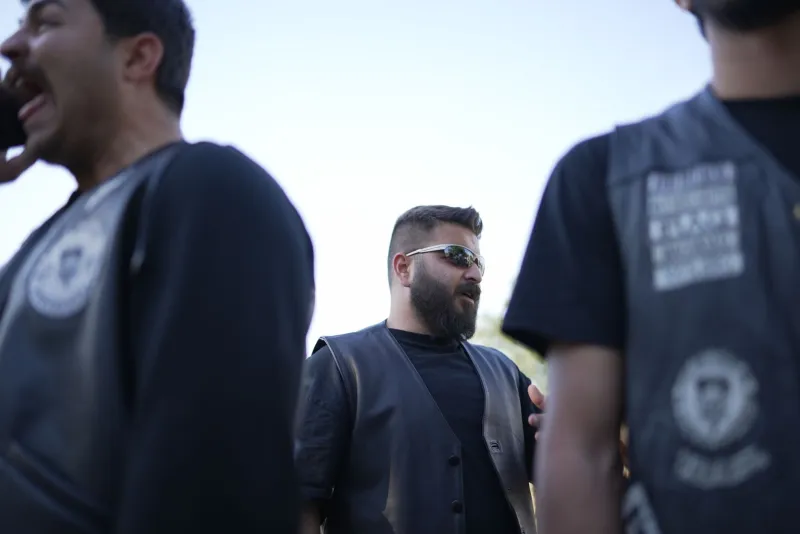
To outsiders, the three-piece patch on the back of a cut might just look like a logo. To the person wearing it, it's closer to a credential — one that took months or years of proving yourself to earn, and one that can be taken back if you stop holding up your end.
Most traditional motorcycle clubs operate on a tiered system. You don't just walk in and get handed colors. There's a prospect period — sometimes called a probationary stretch — where you ride with the club, show up to every function, handle the grunt work nobody else wants, and generally prove that you're someone worth vouching for. Some clubs extend that period well past a year. Some make it indefinitely longer if they're not convinced.
"It's not hazing for the sake of hazing," said one club member from a mid-sized riding club based out of the Carolinas, who asked to remain anonymous. "It's a filter. You're not just joining a group — you're joining something that has a reputation. Your actions reflect on every patch holder. So yeah, we're going to take our time before we hand you one."
The patch itself is typically divided into three pieces: a top rocker with the club name, a center emblem, and a bottom rocker identifying the chapter's territory. Each piece carries weight. Each piece was earned.
The Hierarchy Isn't Just Tradition — It's Functional
Most clubs operate with a structure that would feel familiar to anyone who's served in the military or worked a union job. There's a President at the top, a Vice President, a Road Captain who handles logistics and ride safety, a Sergeant-at-Arms who enforces club rules, a Treasurer, and a Secretary. Below the full patch holders sit the prospects, and in some clubs, even below that are "hang-arounds" — people who haven't even formally committed to prospecting yet.
This isn't bureaucracy for the sake of it. The structure exists because when you're coordinating group rides across state lines, handling club finances, managing relationships with other clubs in your region, and maintaining a reputation that's decades in the making, someone has to be accountable. Everyone has a role. Everyone knows their lane.
"When you've got twenty bikes rolling down the interstate, somebody has to be making decisions," explained a Road Captain from a Midwest-based club. "And those decisions have to be respected. You can't run a club like a group chat where everybody's got an equal opinion on everything. It doesn't work."
Rituals That Can't Be Screenshot
What makes club culture genuinely resistant to the digital age isn't just the structure — it's the rituals. The things that happen in person, in private, that aren't posted anywhere. The vote that decides whether a prospect earns his patch. The moment a new member's colors are placed on his shoulders for the first time. The runs where phones stay in saddlebags and the road does the talking.
These moments are intentionally analog. And that's the point.
In a culture where everything is documented, curated, and performed for an audience, there's something almost radical about an experience that exists only for the people in the room. No story. No reel. No clout attached. Just the weight of the moment and the people you're sharing it with.
Several members we spoke to pointed to this as one of the main reasons they sought out club life in the first place — not to escape technology entirely, but to have something in their lives that technology couldn't touch.
"I've got Instagram like everyone else," said one patch holder from a Texas club. "But what happens inside the clubhouse stays inside the clubhouse. That separation matters. It means something."
Why More Riders Are Seeking It Out
Here's the tension worth sitting with: motorcycle club culture, with all its gatekeeping and hierarchy and unwritten rules, is genuinely appealing to a generation that was raised to believe those things were obstacles rather than features.
Younger riders — people in their twenties and early thirties — are showing up to club events, asking questions, and putting in the time to prospect. Not because it's easy. Because it isn't.
There's a growing appetite for earned belonging. For relationships that cost something. For a community where your presence is expected, not optional, and where flaking has real consequences beyond just getting muted in a group chat.
"You can't ghost a club," said one member bluntly. "You miss a run without a reason, people notice. You don't show up when a brother needs help, people remember. That accountability is the whole thing. It's what makes it real."
Social media friendships are, by design, low-stakes. You can drift in and out. You can maintain the appearance of connection without any of its obligations. Motorcycle clubs are the structural opposite of that. The obligations are written into the bylaws. The expectations are stated out loud. And the consequences of falling short are real.
The Cost of Loyalty
None of this comes without trade-offs. Club life demands time — weekend runs, club meetings, functions you're expected to attend. It demands money — dues, gear, keeping your bike road-ready. And it demands a level of personal accountability that can feel suffocating if you're not genuinely bought in.
Some people prospect and decide it's not for them. That's the filter doing its job.
But for the people who do earn their patch and wear it for years, the consensus is consistent: the cost is exactly what makes it worth something.
"I've got brothers in this club I'd do anything for," said one long-time member from a Pacific Northwest chapter. "And I know — I actually know — they'd do the same for me. You can't say that about your followers."
In a world that's made connection cheap and loyalty optional, that kind of certainty is rare. Maybe that's why the patch still means so much. And maybe that's why the road, and the people you ride it with, still matter more than anything you can find on a screen.
Ride2Die.