You Paid for It, But Do You Actually Own It? The Hidden Hands Controlling Your Build
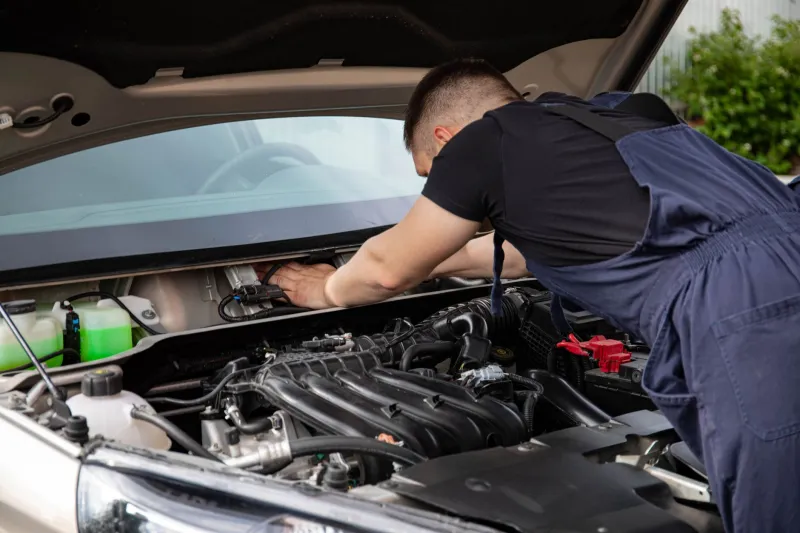
There's a moment every builder knows. You're standing in the garage at midnight, hands raw, smelling like penetrating oil and ambition, staring at something that didn't exist six months ago. It's yours. Every bolt, every decision, every dollar. Except — is it?
Because somewhere between the dream and the driveway, a whole lot of other people got a vote on what you're allowed to do with that machine. And most of them never touched a wrench in their lives.
The Bank's Car, Your Problem
Let's start with the obvious one that nobody talks about honestly: financing. According to Experian's 2023 automotive finance data, roughly 80% of new vehicle purchases in the US involve some form of loan. That means the majority of people who think they "own" their car are actually co-habitating with a lienholder who has very specific opinions about what happens to that vehicle.
Read the fine print on most auto loan agreements and you'll find language that restricts modifications that could affect the vehicle's value. Lift kits. Engine swaps. Even certain aftermarket wheels. Technically, some lenders have grounds to call a loan if you significantly alter the collateral — meaning the car securing their investment.
"Most people never get called on it," says Marcus Webb, a Texas-based automotive attorney who's spent fifteen years untangling disputes between builders and financial institutions. "But 'most people' isn't the same as 'nobody.' I've seen lenders get very interested in a vehicle's condition when an owner falls behind on payments and the car suddenly looks a lot different than the one they financed."
The risk is low, but it's real. And it's a leash most builders don't even know they're wearing.
The Insurance Maze
If the bank is a silent landlord, insurance companies are the building inspectors — and they show up at the worst times.
Standard auto insurance policies in the US are written around stock vehicles. Modifications exist in a gray zone that varies wildly by carrier, by state, and sometimes by which adjuster picks up your claim. A built motor that adds 200 horsepower to your daily driver? Your insurer may have no idea it exists — until something goes wrong.
Denver-based builder Carla Montoya learned this the hard way after a rear-end collision totaled her built Subaru WRX. "They paid out on a stock WRX. All those suspension upgrades, the turbo work, the custom exhaust — none of it existed as far as they were concerned. I ate thousands of dollars in parts that they just didn't acknowledge."
Specialty insurers like Hagerty and American Collectors Insurance exist specifically for this gap, but they come with their own restrictions — mileage caps, storage requirements, limitations on how and where you drive. You gain coverage, but you give up freedom. The car that was supposed to be your escape route now needs a permission slip.
The EPA Is in the Passenger Seat
Federal emissions regulations don't just govern what comes out of factory tailpipes — they reach directly into your garage. The Clean Air Act's tampering provisions make it illegal to modify or remove emissions control equipment on vehicles intended for road use. That means catalytic converters, EGR systems, and oxygen sensors are legally protected components, even on a car you own outright.
The enforcement reality is uneven. It depends heavily on where you live. States like California operate their own inspection regimes that go well beyond federal minimums. Others barely check. But the legal exposure is uniform across state lines, and it's getting more attention.
"The aftermarket parts industry has been fighting this for years," says Rob Delacroix, a lobbyist who works with several motorsport industry groups in Washington, D.C. "There's a legitimate argument that performance modifications for track-only use should be treated differently than street cars. But the law doesn't always make that distinction cleanly, and enforcement is inconsistent enough that a lot of builders are operating in genuine legal gray areas without realizing it."
The SEMA Action Network has been pushing for clearer carve-outs for competition vehicles, with some success. But for the average weekend builder, the regulatory landscape remains a minefield of "technically illegal" modifications that most people run anyway and hope nobody notices.
The Algorithm as Gatekeeper
Here's the one that's newer, weirder, and somehow more insidious than all the rest: social media.
Car culture lives online now. Build threads, Instagram reels, YouTube channels — the community has migrated to platforms that have their own ideas about what automotive content looks like. And those platforms are increasingly squeamish about anything that reads as dangerous, illegal, or brand-unfriendly.
Burn-outs get flagged. Dyno pulls get age-restricted. Videos of track days disappear without explanation. Content creators who built audiences around raw, unfiltered car culture are finding their reach throttled by algorithms that can't tell the difference between a closed-course performance demonstration and reckless endangerment.
"I've had videos demonetized for showing a completely legal highway pull in a state where there's no posted speed limit on that stretch," says Tyler Okafor, who runs a 200,000-subscriber YouTube channel focused on American muscle builds. "The algorithm doesn't know the law. It just sees speed and flags it. And when your income depends on that platform, you start making different choices about what you film."
That self-censorship ripples through the culture. What gets built, what gets shared, what gets celebrated — it's increasingly filtered through what the platforms will tolerate. The invisible landlord isn't just in your loan documents anymore. It's in your phone.
So What Does Ownership Actually Mean?
None of this is an argument for nihilism. People build incredible machines every day, in every state, under all these constraints. The culture is alive and genuinely thriving in ways that would've seemed impossible twenty years ago.
But there's value in being clear-eyed about the terms. "Ownership" in 2024 is less a binary condition than a spectrum of permissions — some granted by law, some by contract, some by the shifting moods of tech companies whose primary interest in car culture begins and ends with advertising revenue.
The builders who navigate it best tend to be the ones who understand the game rather than pretending it doesn't exist. They know which modifications require specialty insurance riders. They know the difference between a 49-state legal part and a California-compliant one. They document everything and build relationships with lenders who specialize in performance vehicles.
And maybe most importantly, they build for themselves first — not for the feed, not for the algorithm, not for the approval of strangers who'll scroll past in three seconds.
Because at the end of the day, the garage at midnight is still yours. The grease is still real. And the machine you're building — even with all its invisible co-owners — still runs on your time, your money, and your obsession.
That's not nothing. That's actually everything.
Just go in knowing who else has a key.