Grease and Wisdom: Why the Next Generation Is Trading Screens for a Seasoned Mechanic's Shop
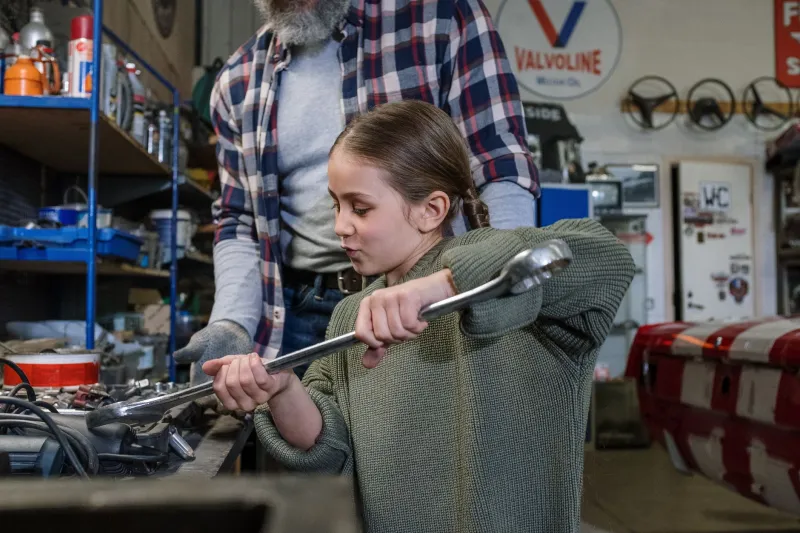
There's a guy named Dale in a small town outside Knoxville, Tennessee. He's been turning wrenches since the Carter administration, runs a one-bay shop out of a converted barn, and until about three years ago, worked almost entirely alone. Now, on any given Saturday morning, there are two or three kids — twentysomethings, mostly — sitting on overturned buckets, watching him work, asking questions, and slowly, carefully, learning how to do things right.
Nobody advertised. Nobody made a reel about it. It just... happened.
That's the thing about this shift. It didn't come with a press release. It's been growing quietly, organically, in garages and bike shops and driveways from Portland to Pensacola. A new generation of riders and builders has decided that the algorithm can only teach them so much — and that the rest of it, the stuff that actually matters, lives in the hands and heads of people who've been doing this for decades.
The Limits of the Tutorial Economy
Let's be honest about what YouTube gave us. Access, mostly. The ability to watch someone in a clean shop with good lighting walk through a carburetor rebuild or a fork seal swap in fifteen minutes. That's genuinely useful. Nobody's throwing shade at the format.
But here's what the tutorial economy never figured out how to deliver: instinct. The ability to hear that something's wrong before you see it. Knowing when a torque spec is technically correct but still feels off. Understanding why a bike that looks perfect on paper pulls to the left at highway speed. That knowledge doesn't compress into a ten-minute video. It doesn't have a timestamp you can skip to.
Young riders are figuring this out the hard way — usually after following a tutorial to the letter and still ending up with a problem they can't diagnose. And instead of opening another tab, more of them are starting to ask a different question: Who do I know that actually knows this stuff?
Mentorship as Status Symbol
Here's where it gets interesting. In certain corners of car and motorcycle culture, having a mentor — a real one, someone with calluses and a story behind every scar — has become its own kind of clout. Not the Instagram kind. Something quieter and more durable.
Talk to the younger crowd at any serious local car meet or bike night and you'll start to notice a pattern. The ones who carry themselves with the most confidence aren't necessarily the ones with the cleanest builds or the most followers. They're the ones who can tell you exactly who taught them how to set valve lash, or who walked them through their first engine-out job. They wear that knowledge like a patch.
There's a reason for that. Mentorship, real mentorship, is hard to fake. You either put in the hours in someone's shop or you didn't. You either learned to read a micrometer from a guy who's been using one since 1987, or you watched a video about it. The community can usually tell the difference.
What the Veterans Are Getting Out of It
This isn't a one-sided transaction, and the older generation will tell you that straight up. Dale, back in that Knoxville barn, says having young people around has changed the way he thinks about his own work.
"They ask questions I stopped asking thirty years ago," he says, not looking up from a rocker arm he's inspecting. "Sometimes that's annoying. Sometimes it makes me realize I've been doing something on autopilot when I should've been thinking about it."
That's a theme you hear over and over from veteran mechanics and builders who've opened their shops to younger enthusiasts. There's a reinvigoration that comes with being asked to explain what you know. It forces articulation of things that have long lived only in muscle memory. And for a generation of older gearheads who've watched car culture get increasingly swallowed by content and commerce, having someone genuinely hungry for the craft is, frankly, a relief.
Some of these relationships have turned into something nobody expected. Real friendships. Intergenerational bonds that cut across every demographic line you can name. A 22-year-old from Chicago learning vintage Harley carb tuning from a 68-year-old Korean War vet's son in rural Ohio. A retired Chicana machinist in Albuquerque teaching a group of young women how to read engine blueprints. These aren't feel-good stories manufactured for a brand campaign. They're just what happens when you put people together around something they both care about.
How It's Actually Happening
The infrastructure for this kind of mentorship is loose and informal, which is part of why it works. Some of it happens through local clubs and riding groups that have deliberately started pairing newer members with experienced ones. Some of it happens through community college automotive programs that have started emphasizing shop-floor apprenticeship alongside the curriculum. A lot of it still happens the old-fashioned way — you show up somewhere, you're clearly eager, and someone eventually takes you under their wing.
Online communities have played a supporting role, which is worth acknowledging. Forums and Discord servers dedicated to specific marques or builds have become places where younger enthusiasts identify mentors before they ever meet in person. The internet as a connector rather than a replacement — that's a distinction the smartest corners of car culture are starting to make.
There are also a handful of more structured programs popping up. Shops in cities like Detroit, Denver, and Baltimore have started offering what amount to informal apprenticeships — a few hours a week in exchange for helping with shop tasks, with the real education happening in the margins. No certification, no formal curriculum. Just knowledge moving from one set of hands to another.
What This Actually Means for Car Culture
If you care about this community surviving in any meaningful form, this trend is about as encouraging as it gets. Car culture has always been about transmission — not just the mechanical kind, but the cultural kind. Passing down knowledge, passion, and respect for the craft from one generation to the next.
For a while it looked like that chain might break. The algorithmic era made it easy to look like you're part of the culture without actually being embedded in it. But the kids hunting down mentors in barn shops and independent garages aren't interested in the performance of car culture. They want the real thing.
And the veterans who are making time for them? They're not doing it for content. They're doing it because they remember what it felt like when someone did it for them.
That's the oldest story in this world. And somehow, it's still the best one.