Broken and Back: How the Worst Day on the Road Became the Best Thing That Ever Happened
There's a moment — ask anyone who's lived it — where everything goes quiet. Not peaceful quiet. Wrong quiet. The kind that follows a screech of tires, a crunch of metal, or the sudden absence of a throttle you were just holding wide open. Time does that thing it does in movies, except it's real, and it's happening to you, and somewhere in the back of your skull you already know this one's going to leave a mark.
For a lot of people, that moment is the end of the story. They walk away — or get carried away — and never look back. The keys go in a drawer. The bike gets sold. The garage gets converted into a home office and that's that.
But for others? That moment is somehow the beginning.
The Crash Nobody Talks About
Denver-based fabricator Marcus Reyes was 34 when a distracted driver ran a red light and took out the front end of his '68 Chevelle on a Tuesday afternoon in broad daylight. Three cracked ribs, a fractured collarbone, a shattered left wrist, and a car that looked like it had been through a compactor. He spent six weeks in recovery, another four months in physical therapy, and somewhere in the middle of all that — propped up in a hospital bed with nothing to do but think — he started sketching.
"I couldn't wrench. I couldn't drive. I could barely hold a pencil," Marcus says. "So I just started drawing what the car was going to look like when I got it back together. Like, not restored. Better. Different. Something I'd been too scared to do before because I didn't want to mess with the original."
The accident, as brutal as it was, gave him permission he didn't know he'd been waiting for.
That Chevelle — the one that got hauled off on a flatbed — is now a full custom build with a supercharged LS swap, a one-off interior, and a paint job Marcus mixed himself in a rented booth outside of Colorado Springs. It's been featured twice on local car show circuits. He gets stopped at gas stations.
"I don't think I ever would've built that car if I hadn't lost the first one," he says, and he's not being dramatic. He means it literally.
When the Body Heals Slower Than the Mind
For motorcycle riders, the calculus is different — and often more complicated. The physical stakes are higher. The recovery is longer. And the psychological weight of getting back on two wheels after a serious get-off carries a specific kind of gravity that four-wheel folks rarely have to reckon with.
Sarah Whitfield, a 41-year-old emergency room nurse from Nashville, went down on her Triumph Street Twin on a rain-slicked stretch of I-24 two years ago. Broken femur. Torn ACL. Months on crutches. She describes the first few weeks of recovery as a kind of grief — not just for the bike, which was totaled, but for the version of herself that had existed before the crash.
"I think what I mourned was the confidence," she says. "I was a good rider. I knew I was a good rider. And then suddenly I wasn't sure what I knew anymore."
Her therapist suggested she might want to consider giving up motorcycles entirely. Her riding group suggested the opposite. She chose the opposite.
The process of getting back on — a rental, then a borrowed bike, then a new Street Twin she ordered before she was even fully off crutches — wasn't about proving something to anyone else. It was about reclaiming a piece of her identity that felt non-negotiable. "That bike is part of how I process stress, how I decompress after brutal shifts, how I feel like me," she explains. "Letting the accident take that would've been a second injury."
What the Road Takes, and What It Gives Back
There's a psychological concept called post-traumatic growth — the idea that some people don't just recover from trauma, they actually emerge from it with a clearer sense of purpose, stronger relationships, and a deeper appreciation for the things that matter most to them. Researchers have documented it in veterans, cancer survivors, and first responders. It doesn't get talked about as much in car culture circles, but it shows up there too, in its own particular flavor.
For enthusiasts, the road and the machine aren't hobbies in the conventional sense. They're identity infrastructure. They're how people know who they are, how they connect with community, how they metabolize hard days and celebrate good ones. When an accident threatens all of that, the response — for the people who come back — often isn't detachment. It's a kind of doubling down that outsiders find baffling.
"People kept asking me why I would ever want to ride again," Sarah says. "And I kept thinking — why would I let one bad day define everything?"
Marcus puts it a different way. "The car didn't almost kill me. A careless driver did. The car was the victim too."
The Build as Rehabilitation
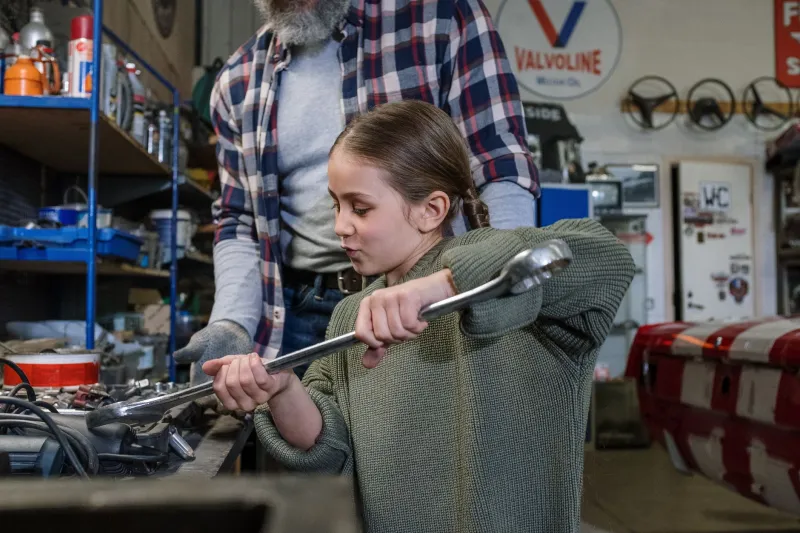
One thread that runs through nearly every story like this is the role of the garage in recovery. Not just as a physical space, but as a therapeutic one. There's something about working with your hands — torqueing a bolt, running a bead of weld, sanding a panel until it's glass — that quiets the noise in a way that's hard to replicate anywhere else.
Marcus spent his physical therapy sessions obsessing over parts lists. The day he was cleared to use both hands, he was under the Chevelle before the sun went down. "Wrenching felt like proof I was still here," he says. "Like, my body works. I can do this. I'm not done."
That's a sentiment you hear over and over from people who've come back from serious crashes. The rebuild — of the car, the bike, or both — runs parallel to the personal rebuild. They feed each other. Progress in the garage translates into something that feels like momentum in life, and vice versa.
You Don't Have to Explain It
If you've never had a serious accident, the idea that someone could walk away from one more committed to the lifestyle than before probably sounds irrational. Maybe even reckless. And look — nobody's here to tell you the risk isn't real, or that every story ends the way Marcus's and Sarah's did. They don't.
But for the people who do come back, there's a clarity on the other side of that experience that's hard to argue with. They know what the road costs. They've paid it. And they chose to keep going anyway — not out of stubbornness, not out of denial, but because somewhere in the wreckage they found something worth rebuilding.
That's not recklessness. That's devotion.
And if you've ever felt it — that pull, that need, that thing that makes you reach for your keys even when you know the odds — then you already understand it better than any explanation could cover.
Ride2Die isn't just a name. For some of us, it's a decision we made in a hospital bed, staring at the ceiling, sketching our next build on a napkin.
See you out there.